Can’t get the plasmid extraction concentration to rise? 90% of researchers have fallen into these pitfalls.
Friends who do molecular biology experiments, who has not been severely trapped by plasmid extraction?
Clearly, it is operated step by step strictly according to the instructions of the kit. The concentration proposed by the same door is often several hundred ng/μL, and the one mentioned by oneself is less than 50ng/μL. The result of repeated several times is still pulling the crotch. Not only did it delay the subsequent enzyme digestion, sequencing and cell transfection, but even the whole experimental progress was slowed down. After a big night, it was exchanged for invalid data, and the mentality collapsed directly.
As a manufacturer of deep cultivation in the field of life science for 17 years, we have seen too many repeated pits stepped on by researchers in plasmid extraction. Today, I will thoroughly disassemble the full-dimensional reasons for the low concentration of plasmid extraction, from the objective hardware that is easy to be ignored to the subjective operation of high-frequency rollover, so as to help you check all the problems at one time. It is suggested to collect it first and then look it up at any time when doing experiments.
1. don't doubt your operation yet! These objective factors,congenitally determine the upper limit of plasmid concentration
as soon as many people encounter low concentration,they frantically resume their own operations,but ignore the two most basic objective factors. Even if there are zero errors in the operation,they may directly reduce the output by these two problems.
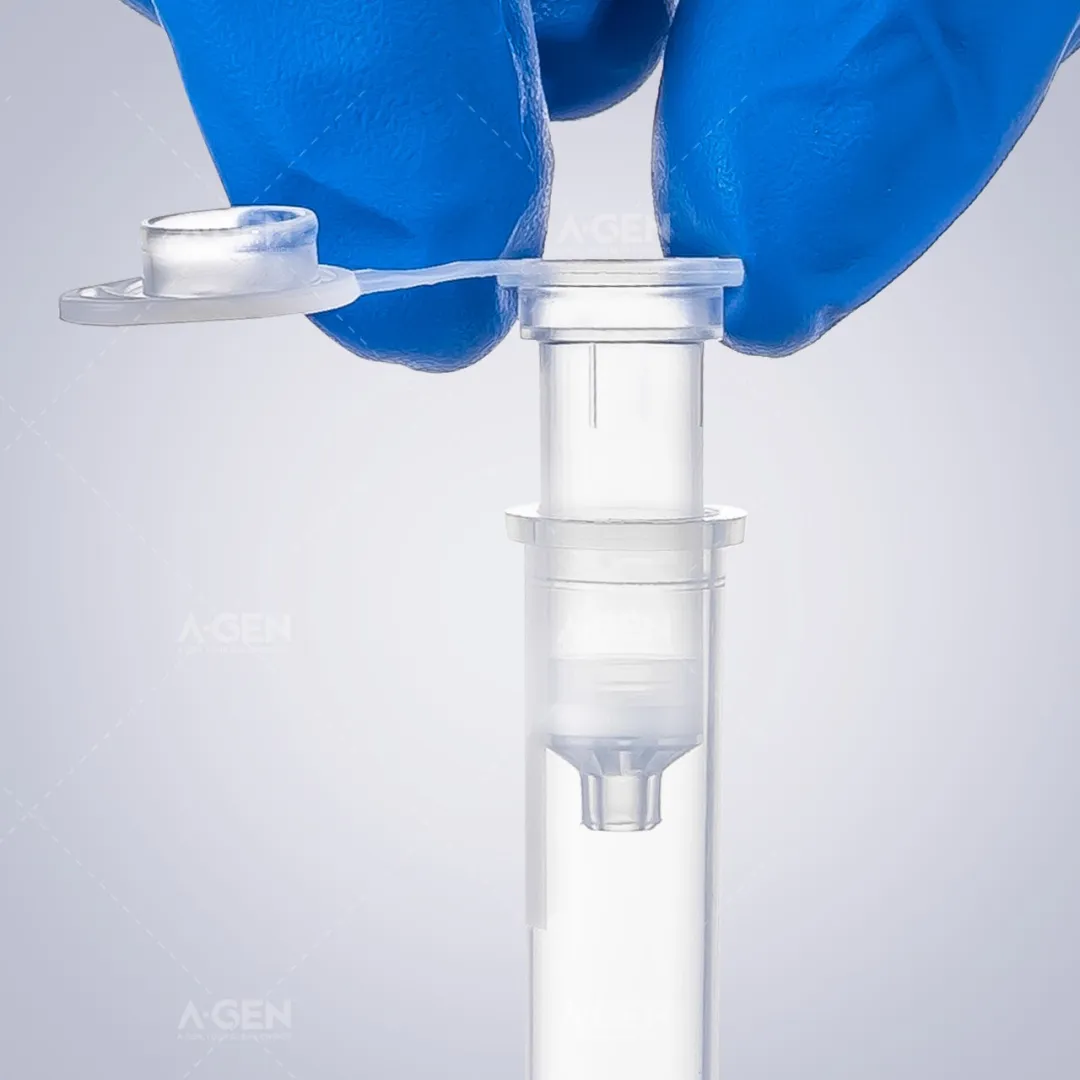
1. The stability of the purification column is the core soul of the kit
different from most people's cognition, the core advantage of a reliable plasmid DNA extraction kit is never the reagent formula, but the matching nucleic acid purification column. The adsorption efficiency and stability of the column directly determine how much plasmid DNA you can eventually recover.
The lack of column stability is the core research and development pain point of the vast majority of nucleic acid extraction kit manufacturers. At present, there are two main solutions in the industry:
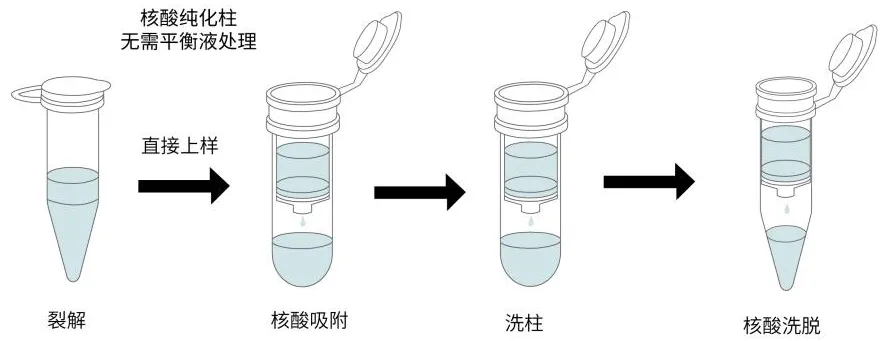
one is to overcome the technical difficulties from the source, optimize the production process of the column itself, and pull the stability to the full. The user can directly load the sample to complete the adsorption without balancing liquid treatment, with zero additional burden on the operation;
the other is to transfer the complexity of the operation to the user, and make up for the stability defect of the column itself by adding additional steps of balancing liquid to deal with the column, which not only increases the operation steps, but also easily causes the extraction efficiency fluctuation due to the insufficient balancing operation.
If you use the kit, often appear "the same batch operation, some sample concentration is high and some low" "this time is very good, the next repeat will overturn", the big probability is the quality control and stability of the purification column has a problem.
2. Plasmid copy number and vector size directly determine the yield ceiling
this factor is not likely to occur in routine experiments, but it is a point that cannot be bypassed when extracting low-copy plasmids.
For large plasmids such as BAC and PAC, they belong to low-copy plasmids. Under the same amount of bacteria, the concentration of extracted plasmids is naturally lower than that of high-copy plasmids, which is determined by the characteristics of plasmids themselves, and there is no need to over-struggle operation;
there is also a cold knowledge that many people do not know: it is also a pUC-19 plasmid, an empty vector of about 3K, and a recombinant plasmid with 3K gene inserted. Under the same other conditions, the extraction concentration of the recombinant plasmid can be about twice as high as that of the empty vector.
2. focus! 90% of the concentration of rollover comes from these subjective operation pits.
Excluding objective factors, we will focus on the investigation of operational links. The vast majority of people's plasmid extraction concentration is low,not because they can't operate, but because they ignore the pits in these details, and there is a problem from the source of bacterial inoculation.
1. Bacterial inoculation and culture are wrong from the source, and it is useless to mention them again.
This is the most common problem in plasmid extraction, which contains three cognitive misunderstandings that 90% of researchers have had.
Myth 1: Antibiotics can directly kill E. coli without plasmid
the truth is: we commonly used ampicillin, kanamycin and other antibiotics, the core mechanism of action is to inhibit bacterial cell wall synthesis, hinder the normal physiological activities of bacteria, thereby preventing their reproduction, not directly kill bacteria.
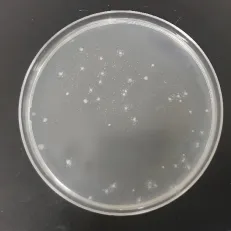
E. coli without plasmids will not disappear completely because antibiotics are added to the medium. They just enter a dormant state. Once the antibiotics slowly fail, they will immediately resume reproduction. This is also the core reason why a large number of small colonies will grow in the blank area that was originally sterile after the transformed plate was put in a refrigerator at 2-8 ℃ for several days.
These "empty bacteria" without plasmids will only occupy the culture medium and will not produce any plasmids. After a large number of reproduction, the final plasmid yield will be directly diluted, resulting in a serious low concentration.
Myth 2: Monoclonal colonies on plates, containing only E. coli with plasmids
many people think that I chose a single clone, which must be pure plasmid-bearing bacteria. This idea is directly wrong.
Bacteria that do not carry plasmids, in addition to waiting for antibiotics to fail to reproduce, will also attach to the plasmid-carrying bacterial colonies to reproduce together. That is to say, in the monoclonal colony you picked, there is a high probability of mixing a lot of Escherichia coli without plasmids. After inoculation and amplification, the plasmid concentration will naturally be lowered.
✅Suggestions for avoiding pits: when picking single clones, give priority to fresh colonies with uniform shape and moderate size, do not pick colonies that are too large or too old, and do not pick colonies on the edge of the plate; Antibiotics in the culture medium should be used now and added in sufficient amount according to the instructions to reduce the breeding space of empty bacteria.
Myth 3: bacterial inoculation without strict aseptic operation
many people are easy to relax in aseptic operation when they are done well in the experiment. They feel that enzyme digestion and PCR are not sterile, and bacterial inoculation does not matter. But be sure to remember: ampicillin, kanamycin these commonly used antibiotics, only have inhibitory effect on bacteria, fungi completely ineffective.
Once the operation is not standardized and causes fungal contamination, what grows in your culture medium may not be the target E. coli at all, and plasmids will not be found naturally in the future.
rapid judgment method of pollution:
after the addition of the lysate Buffer A2, the lysate was turbid, opaque and non-viscous, with a high probability that the culture was mixed with fungi;
if the lysate is not only turbid, but also has no sticky feeling at all, it can be basically determined that the fungal colony on the plate you picked for inoculation is basically the fungal colony on the plate, there is no Escherichia coli, and naturally there is no plasmid.
✅Suggestions for avoiding pits: strict aseptic operation shall be carried out during the whole process of bacterial inoculation, ultra-clean table shall be sterilized by ultraviolet light in advance, gun head, centrifuge tube and test tube shall be sterilized under high pressure, and the prepared culture medium shall be sterilized in time. The coated plate shall not be stored in the refrigerator for a long time to avoid breeding fungi.
2. The more bacterial liquid is used, the higher the plasmid concentration? Excessive bacteria directly causes the extraction efficiency to plummet.
This is the easiest pit for novices to step on: the more bacteria there are, the more plasmids there will be. if you add 1-2mL of bacteria liquid required in the instructions directly to 5mL or more, the result will be lower concentration.
The truth is: within a certain range, increasing the amount of bacteria can improve the recovery amount of plasmid DNA, but once the upper limit of the lysis load of the kit is exceeded, the excess bacteria will not be fully lysed, the plasmid DNA will not be released sufficiently, but the recovery efficiency will be greatly reduced, and even the plasmid will be wrapped by protein precipitation and discarded with centrifugation.
Rapid judgment method of excessive cell mass (novice can also understand at a glance):
after adding the lysate Buffer A2, the lysate is too viscous and jelly-like, and cannot flow smoothly when the centrifuge tube is turned over, which can be judged as excessive amount of bacteria;
after adding buffer A3, the precipitate formed is difficult to shrink and disperse, and cannot settle to the bottom of the tube after centrifugation, even in a state of expansion and suspension, which is also a typical manifestation of excessive bacterial dosage.
✅Suggestions for avoiding pits: Use the bacterial liquid in strict accordance with the recommended dosage in the kit instructions. If the concentration of the bacterial liquid is extremely high after overnight culture and the OD value is far beyond the conventional range, the sample volume can be appropriately reduced and the dosage of the bacterial liquid should not be increased blindly.
3. plasmid extraction concentration is low, one-stop screening and solution
we have sorted out a sequence of investigation from easy to difficult. If we encounter problems with low concentration, we can quickly locate the root of the problem step by step according to this sequence:
look at the bacteria solution first: check whether the bacteria are excessive, whether the lysis/neutralization phenomenon is abnormal, and whether there is fungal pollution;
look at vaccination again: check whether antibiotics are invalid, whether the selected monoclonal is qualified, and whether aseptic operation is in place;
look at the plasmid itself: confirm whether it is a low-copy large plasmid and whether the size of the vector affects the yield;
finally, look at the kit: check whether the stability of the purification column is insufficient, the batch difference is large, and the adsorption efficiency is not up to standard.
If you want to reduce the rollover probability of plasmid extraction from the root, choosing a stable and reliable kit can help you avoid 80% of the pits.
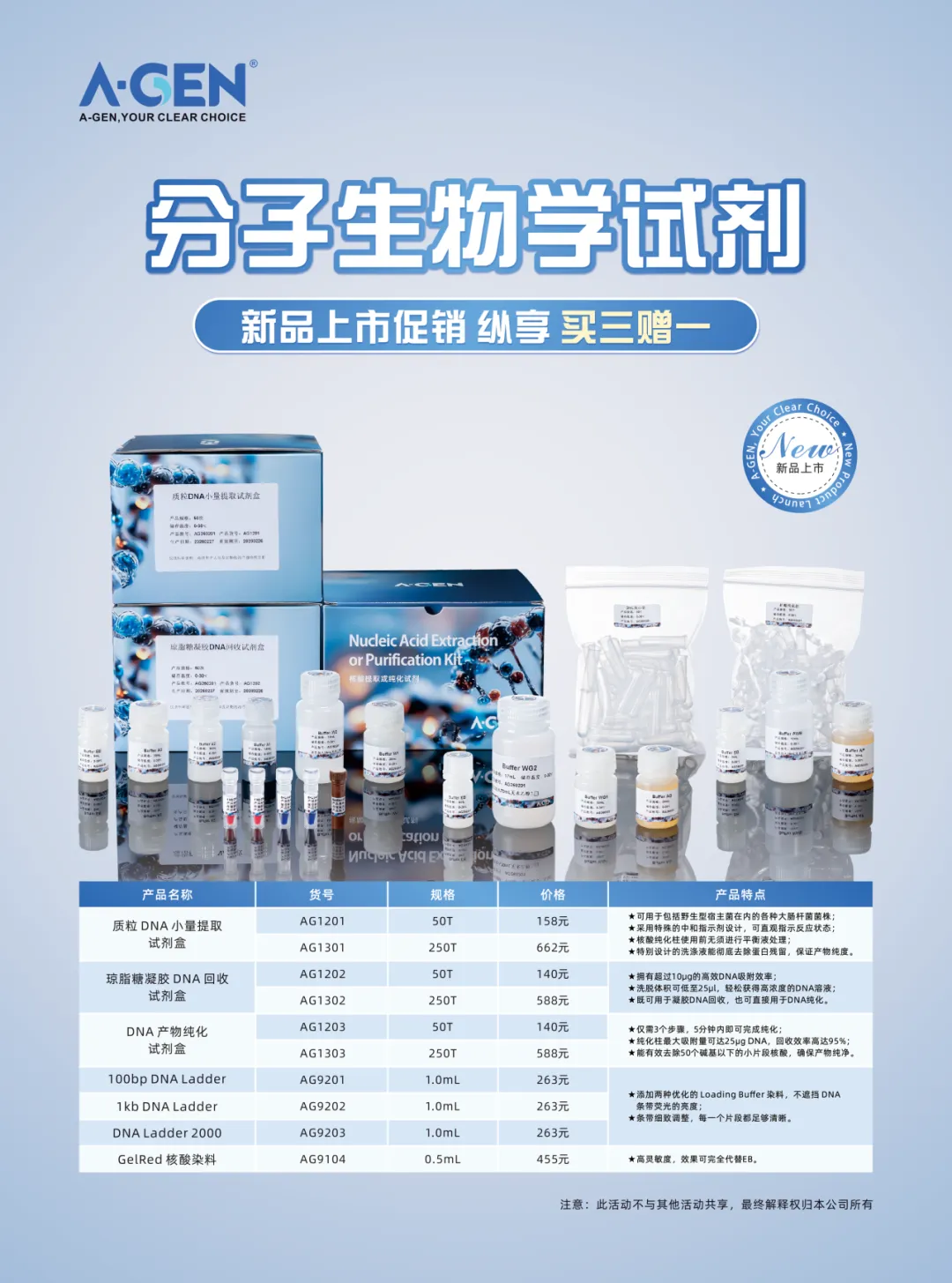
We have been deeply engaged in life science for 17 years, and have realized the whole technology closed loop from the core adsorption carrier (purification column) to the core reaction system (reagent formula). We have newly launched the plasmid DNA small extraction kit of "original column with stock solution", which is specially designed to solve the pain point of low concentration and large fluctuation of plasmid extraction:
independent research and development and production of high stability purification column, without the balance of liquid treatment, the operation is more simple, the adsorption efficiency is full, the difference between batches is very small, bid farewell to "this good next bad" embarrassment;
the special neutralization indicator design can visually indicate the reaction state, and the novice can accurately control the cracking and neutralization steps to minimize operational errors;
it can be adapted to various E. coli strains including wild-type host bacteria, and can stably obtain high-concentration and high-purity plasmid DNA under conventional operations, which is perfectly adapted to the needs of a full series of experiments such as subsequent enzyme digestion, sequencing, transfection, virus packaging, etc.
At the same time, we also have a full range of molecular biology reagents such as agarose gel DNA recovery kit, DNA product purification kit, high-sensitivity nucleic acid dye, full-specification DNA Ladder, etc. to meet your molecular experiment needs in one stop. At present, there is also an exclusive activity of buying three and getting one free on the market for new products. Scientific research friends who need it can learn more about it.
End
plasmid extraction is the basic operation of molecular biology, but it is also the easiest link to hide the pit. Most of the time, it is not that you can't operate,but ignore the key issues in these details.
What problems have you encountered in the process of plasmid extraction and nucleic acid purification? Welcome to leave a message in the comment area,we will answer them one by one,and help you solve the experimental problems!
Finally,I wish all researchers:the experiment is smooth,the strip is clear,the concentration is off the charts,and the article is received smoothly as soon as possible!